

Objective: To determine the effect of bran particles on the color and ash content of wheat flour
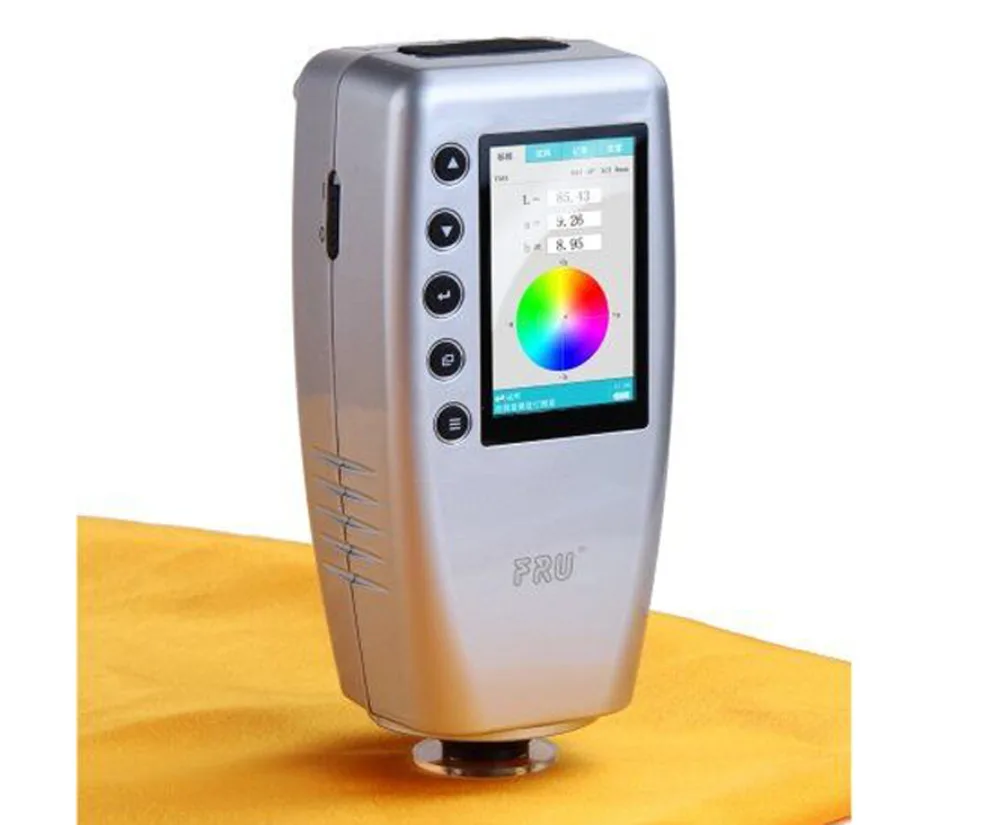
Background: Color is a sensory attribute of food that can be used to determine its quality and consumer acceptability. In the flour milling industry, the color of flour is used as an indication of bran contamination. Color may be determined using a simple color chart where foods are visually matched against a target color, or by instrumentation. In this lab, we will be using instrumentation using a colorimeter. The device provides a more objective measure compared to the color chart method. Using a colorimeter, color is reported in L*, a* and b* values.

L*a*b* color measurements
L* values (also called value) indicate degree of lightness from black to white (range = 0 – 100). Negative b* is blue, positive b* is yellow; negative a* is green and positive a* is red. Both a* and b* values range from -127 to +127. These values can be used to calculate hue and chroma (also called saturation).

Hue is what we usually refer to as color. So red, green, blue etc. are actually hue rather than simply color. Color is more complex, comprising of not only hue but also variations in lightness and intensity. Chroma refers to how intense the hue is. The diagram below illustrates the differences between lightness (L* value), hue and chroma. Note that lightness (L*) changes from top to bottom, hue changes as you move around the center, and chroma changes as you move outward from the center.

Intensity, Hue, and Chroma
The calculated hue (in degrees) will give you an indication of what the “color” will look like. For example a hue of 0o will correspond to red, a hue of 120 will correspond to green etc.

Materials and Equipment
- Five 250 ml beakers containing 150 g of white flour with increasing concentration of wheat bran powder (0%, 2.5%, 5%, 10%, and 15%)
- Konica Minolta Chroma Meter (CR-410)
- Disposable Petri dishes
Method
- Transfer enough flour sample to Petri dish (in duplicate) to fill half the volume of the dish. Tap the dish lightly to make sure that the material at the bottom is evenly distributed and that there are no air pockets
- Measure the color of the samples by placing the Petri dish on top of the Chroma Meter’s measuring port and pressing the measuring trigger. Record the L*a*b* values.
- Collect 5 g of samples (in duplicate) from each flour treatment and determine the ash content as described in Lab 3.
Lab Questions
- Calculate and describe the hue for each sample. (5 points)
- Explain the relationship between the color of wheat flour and ash content (5 points)
- What is the disadvantage, if any, in having high bran contamination in wheat flour? (2 points)

